
Many hobbyists fall into the same trap: they invest in monumental cathedrals, massive bunkers, and sprawling ruined tenements. While these pieces look stunning in photos and define the “center” of a battlefield, they often leave the rest of the board feeling like a tactical desert. During actual gameplay, it’s the low linear obstacles fences and walls, that dictate the flow of battle. If your table looks like a few isolated islands floating in an ocean of empty space, it’s time to rethink your terrain collection.
The Charge Killer: Tactical Advantages of Low Obstacles
Never underestimate the power of a simple wooden fence. In most wargaming systems- from Warhammer 40,000 and Age of Sigmar to Trench Crusade and Star Wars: Legion– crossing linear obstacles is a mechanical nightmare for the attacker.
- Halting Momentum: A wall isn’t an impassable mountain, but it is a hurdle that forces difficult terrain tests or imposes penalties on charge distances. A well-placed stone wall can leave an elite enemy unit stranded in the open just an inch away from combat because they failed to “clear” the obstacle.
- Cover Without Blocking Sight (Light Cover): This is a crucial tactical nuance. Fences provide your units with a defensive bonus (often a modifier to Save rolls) without blocking your own line of sight. You can safely fire upon the enemy from behind a barrier that acts as a physical hindrance for them but a stable firing rest for you.
- Defensive Positions: In many systems, fighting across a wall grants significant melee bonuses. The defending unit is often treated as “entrenched,” which can negate the impact of even the heaviest cavalry charges.
Universal Utility: One Set, Multiple Worlds
The greatest strength of HRC’s linear obstacles is their sheer versatility. Often, a single set of scenery can service several completely different game systems, saving you both hobby budget and shelf space.
- Wooden Fences: An absolute classic. Place them on an Age of Sigmar or The Old World table, and they form a perfect livestock pen for an Imperial village. Move them to historical games like Bolt Action or Napoleonic systems, and they become a key feature in the struggle for a farmhouse or a rural crossroads. Even in Trench Crusade, a battered wooden fence perfectly captures the grim atmosphere of a ruined village in No Man’s Land.
- Jersey Barriers: These are the kings of modern and grimdark settings. In historical WW2 or modern-day conflicts, they serve as vital checkpoints and road blocks. In the world of Trench Crusade, they guard the entrance to holy sectors, while in Sci-Fi games like Warhammer 40k, they provide much-needed makeshift cover on shuttle landing pads.
- Industrial Pipes: For fans of Kill Team or Star Wars: Legion, industrial pipes play the exact same tactical role as stone walls. They provide cover and slow down movement, but their aesthetic fits perfectly within the bowels of a Star Destroyer or a forgotten Martian manufactorum.
Narrative Building: From “Toy Table” to BattlefielD
A table without small details feels sterile and artificial. Fences and walls are storytelling tools. They define property lines, roads, and pastures. When you add scatter terrain, the battlefield stops being a random collection of houses and becomes a real place- someone’s farm, a strategic junction, or a final line of defense.
These pieces allow you to guide the flow of movement on the table without building impassable walls. You suggest paths to the players, create “safe zones,” and force tough decisions: “Do I risk the charge over the fence, or do I go around, exposing my flank to enemy fire?”
HRC Scenery Solutions: Ready-to-Play
At HRC Wargaming Terrain, we know your time is valuable. Nobody wants to spend three evenings meticulously cutting and gluing sticks to create ten inches of fencing. Our sets are designed with a “Ready-to-Play” philosophy.
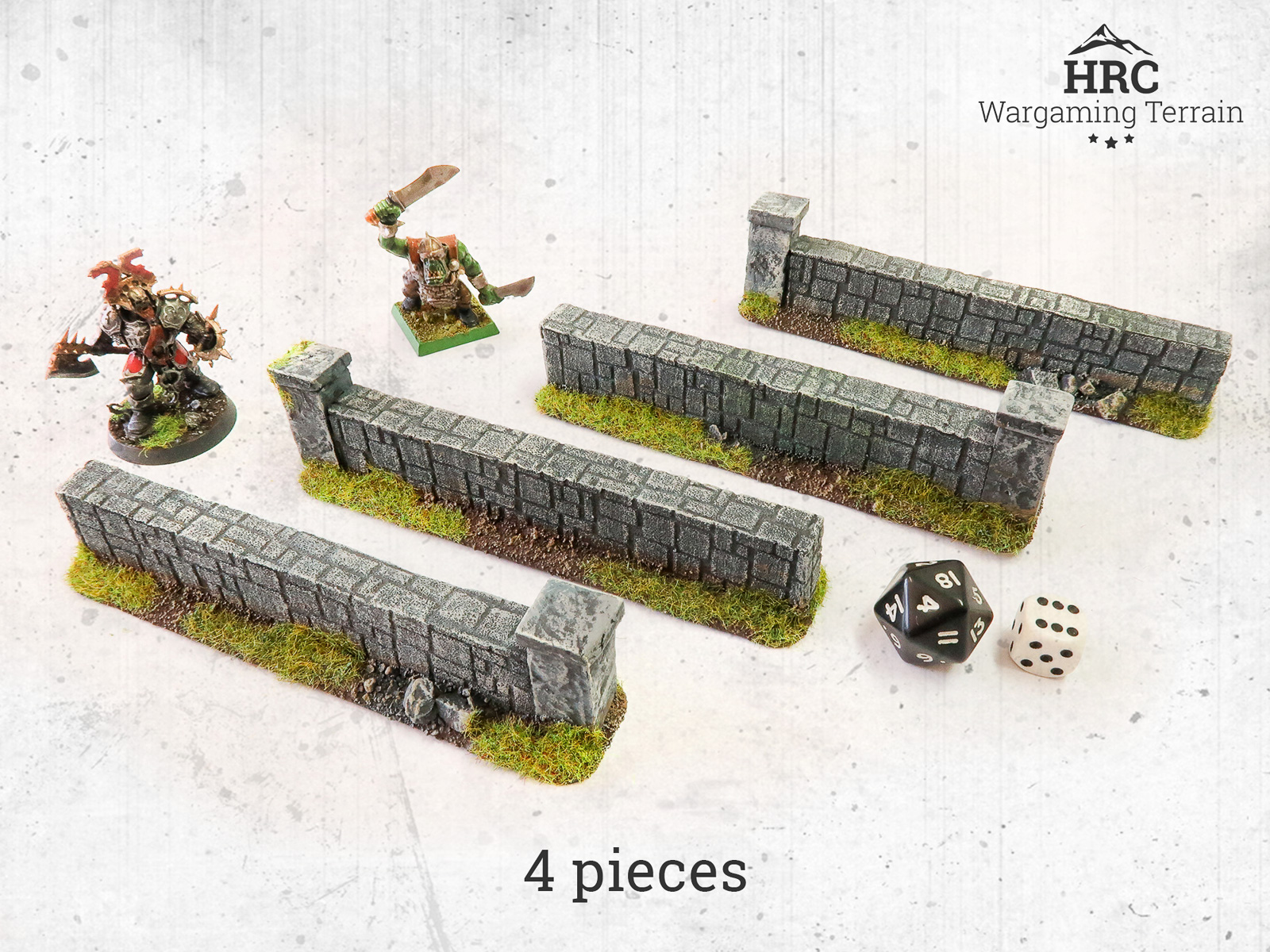
- Modular Stone Walls: Classic stone walls with the texture of real sandstone. They are heavy, stable, and fit everywhere—from the forests of Sherwood to the ruins of Osgiliath.
- Concrete & Jersey Barriers: Cast with high detail, featuring visible rebar and bullet impacts. A must-have for any modern, urban, or futuristic table.
- Industrial Pipe Systems: Modular pipes that you can connect into long pipelines or use as short cover sections. Perfect for densifying terrain in the cramped corridors of Into the Dark.
Remember, terrain is not just decoration. It is your shield and your most lethal tactical weapon. By investing in quality fences and walls, you are investing in the depth and quality of every battle you play.